Frequently Asked Questions
Find answers about our commercial engineering, construction, and maintenance services across Colorado.
Common Questions
Design-build means one team handles both the design (drawings, engineering) and the construction. You get a single point of accountability, tighter coordination between trades, fewer RFIs, and faster project delivery. It also eliminates the finger-pointing that happens when the designer and contractor are different companies.
We maintain emergency response capability for urgent commercial kitchen and restaurant issues — including equipment failures, gas leaks, plumbing emergencies, and fire suppression system problems. Our team can mobilize quickly to assess the situation, make safe temporary repairs, and develop a permanent fix that keeps your operation running with minimal downtime.
Yes. Hood Builder manages the full permitting process on your behalf — from submitting architectural, mechanical, electrical, and plumbing drawings to coordinating inspections with the Authority Having Jurisdiction (AHJ). We track every approval milestone so your project stays on schedule and code-compliant from start to finish.
In most cases, yes. We phase construction work to minimize disruption to your daily operations — scheduling noisy or disruptive tasks during off-hours, isolating work zones, and maintaining safe access for staff and customers. We coordinate closely with your team to keep the kitchen and dining areas functional throughout the project.
Our architectural drawings are permit-ready construction documents — not concept sketches. They include complete kitchen layouts, equipment schedules, lighting plans, fire alarm and suppression integration, and as-built documentation after construction. Every drawing set is produced to meet local code requirements and is coordinated across all trades before submission.
Yes. Hood Builder designs and installs commercial gas line systems for restaurant kitchens — including routing, sizing, shutoff valve placement, and integration with fire suppression systems. Our plumbing and mechanical teams coordinate gas line layouts with your kitchen equipment plan to ensure safe, code-compliant installation.
Type I hoods are required for equipment that produces grease-laden vapors and smoke — fryers, griddles, charbroilers, and woks. Type II hoods are for heat and steam only — dishwashers, steamers, ovens, and coffee equipment. Hood Builder reviews your appliance list and local code requirements before recommending a system.
Most standard installations are completed in 1–3 days. Larger projects involving custom fabrication, long duct runs, or multi-unit installs may take up to a week. We provide a detailed project timeline before work starts and coordinate around your schedule to minimize kitchen downtime.
NFPA 96 sets cleaning intervals based on cooking volume — from monthly for high-volume solid-fuel or wok cooking to annually for low-volume operations. Most full-service restaurants require quarterly cleaning. We assess your kitchen and provide a compliant schedule.
Yes — when designed and installed to NFPA 96 and local AHJ requirements. Hood Builder handles measurements, fabrication, duct routing, electrical tie-in, and final inspection sign-off. Every installation is performed by certified technicians with first-pass approval as the goal.
Makeup air replaces the air your exhaust hood removes from the kitchen. Without balanced makeup air, negative pressure pulls smoke into the dining room, strains HVAC equipment, and creates uncomfortable working conditions. We engineer complete air balance as part of every hood system — not just the hood itself.
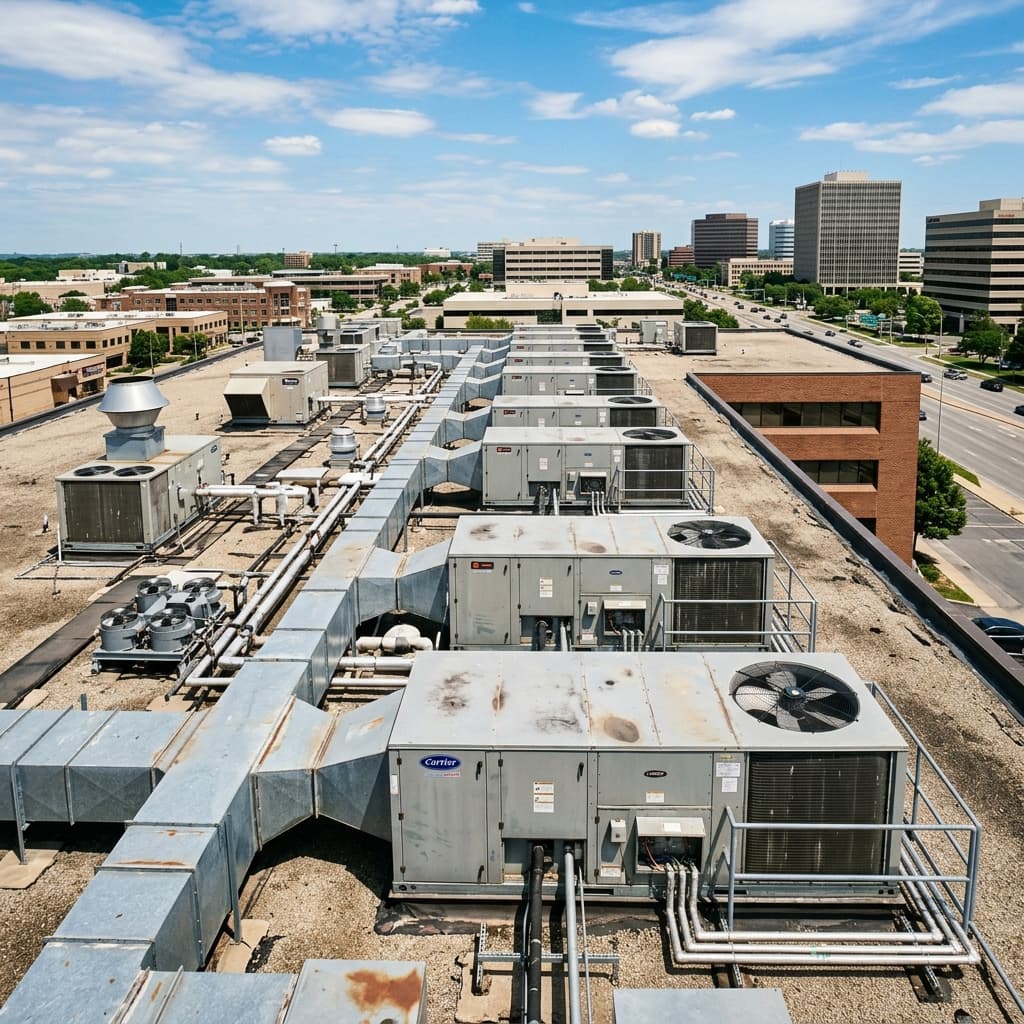
If your system is over 15 years old, requires frequent repairs, can't maintain comfortable temperatures despite service, or uses outdated refrigerant, replacement is often more cost-effective than continued repairs. Hood Builder performs a full assessment — equipment condition, load requirements, and operating costs — and gives you an honest recommendation. We never push replacement when a quality repair will solve the problem.
Air balancing is the process of adjusting airflow throughout your HVAC system so every area of your facility gets the right amount of heated or cooled air. Signs you need it: uneven temperatures across the dining room or kitchen, smoke drifting into dining areas, or doors that are hard to open due to pressure differences. We recommend balancing every two years.
Make-up air replaces the air your exhaust hood removes from the kitchen. Without balanced replacement air, negative pressure builds — smoke rolls into the dining room, HVAC equipment is strained, and doors become difficult to open. Commercial kitchen codes require proper ventilation balance. Hood Builder designs, installs, and services make-up air units sized to your hood's CFM requirements.
Most commercial restaurant HVAC systems should be serviced at least twice per year — before cooling season and before heating season. High-volume kitchens with heavy grease, steam, and exhaust loads often benefit from quarterly maintenance. Hood Builder's programs include filter changes, coil cleaning, airflow checks, and documentation to keep you EPA compliant year-round.
Yes. Hood Builder provides complete HVAC design and installation for new restaurant build-outs — including load calculations, duct layout, heating and cooling systems, make-up air, ventilation integration with hood systems, and final inspection sign-off. We work directly with restaurant owners, general contractors, and facility managers from initial assessment through certificate of occupancy.
A: Yes. Hood Builder delivers turnkey restaurant construction — from site evaluation, drawings, and permit acquisition through design-build, equipment installation, and final punch list. Architects, engineers, and all trades work under one project manager accountable to you.
A: In most cases, yes. We schedule construction work around your operating hours — evenings, weekends, or phased by section. We coordinate the timeline with you at the start of every project and update you at every milestone.
A: We source and install commercial-grade equipment through food-service industry suppliers — cooking lines, refrigeration, dishwashers, ice machines, beverage systems, and more. We recommend equipment based on your kitchen's workload, brand standards, and budget, then handle installation and ongoing maintenance.
A: Frequency depends on cooking volume and local health code requirements — from monthly for high-output kitchens to quarterly for most full-service restaurants. We assess your facility and set a compliant schedule for hood vent cleaning, grease trap service, deep degreasing, and dining room janitorial.
A: Yes. Hood Builder manages the full permitting process — architectural, mechanical, electrical, plumbing, and fire protection drawings submitted to the AHJ, plus inspection coordination at every milestone until final sign-off.
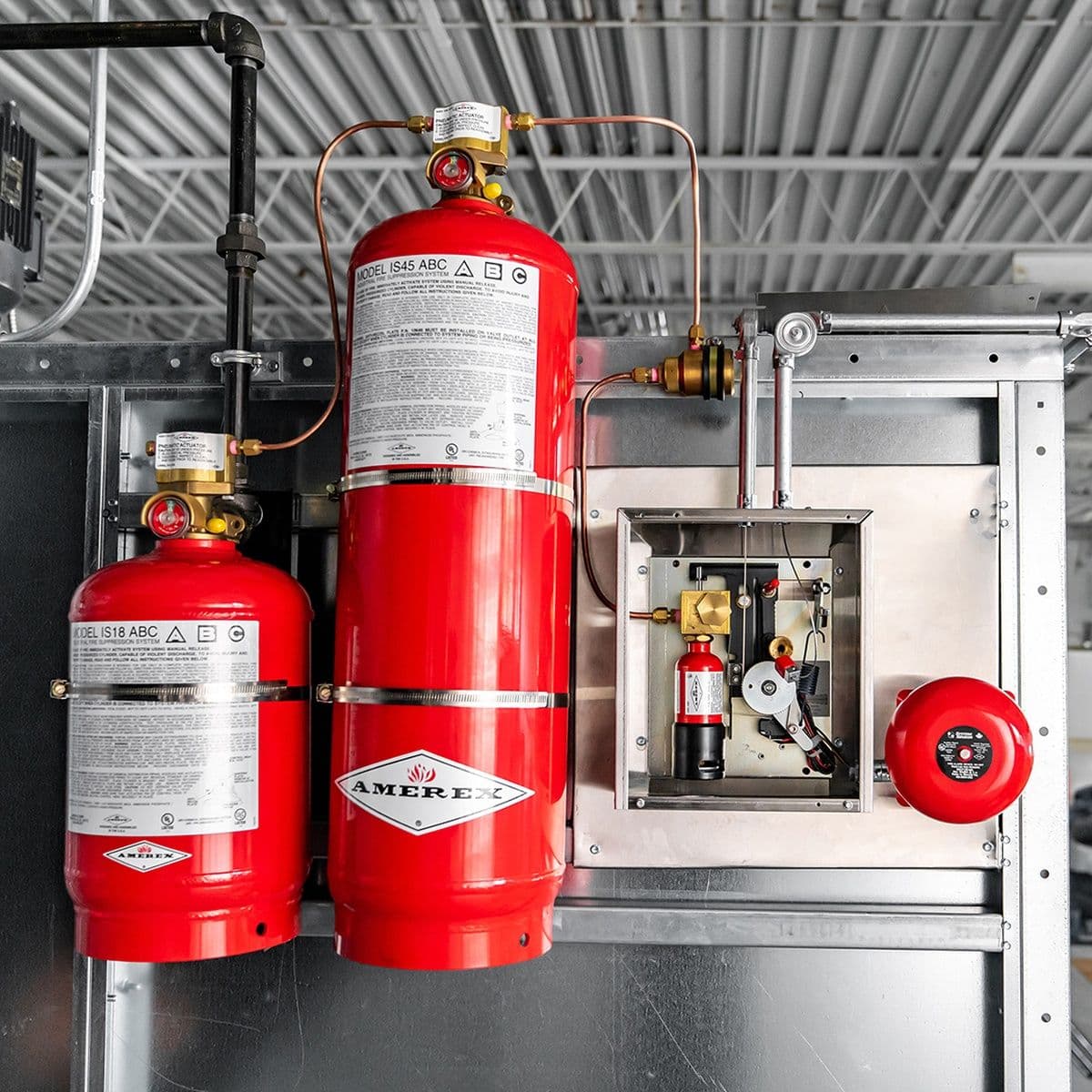
NFPA 96 requires semi-annual inspections for most commercial kitchen suppression systems — every six months. Hood Builder performs full system inspections including nozzle testing, cylinder pressure checks, fusible link verification, and documentation for your health and fire department records.
A: The best system depends on your cooking equipment, kitchen size, and cooking volume. Ansul R-102 is the most common choice for full-service restaurants with fryers and broilers. Buckeye Kitchen Mister™ is excellent for high-grease environments. We assess your kitchen before recommending any system.
Yes. Hood Builder services, repairs, and recertifies fire suppression systems regardless of who installed them. Our technicians work with all major suppression brands — Ansul, Buckeye, Pyrochem, Amerex, and Range Guard — and can bring an existing system up to code during scheduled maintenance or after an inspection failure.
When a system discharges — whether from a real fire or a false activation — the kitchen must remain offline until the system is recharged and reset. Hood Builder responds quickly to recharge cylinders, replace fusible links, reset detection components, and verify the system is ready before you reopen. We document the service for your insurance and fire department records.
Yes. Commercial kitchens that use cooking equipment producing grease-laden vapors are required by NFPA 96 and local fire codes to have an approved fire suppression system installed over cooking lines. Health departments and fire marshals inspect for compliance during permitting and routine inspections. Operating without a compliant system can result in closure, fines, and loss of insurance coverage.
Yes. Hood Builder provides full design-build electrical services — from load calculations and permit drawings through installation, inspection, and final sign-off. Our single-team approach eliminates the coordination gaps that occur when design and installation are handled by separate contractors.
A: Yes. Adding commercial cooking equipment frequently requires panel upgrades, new dedicated circuits, and load recalculation. We assess your existing infrastructure and upgrade it to support the new load safely and to code.
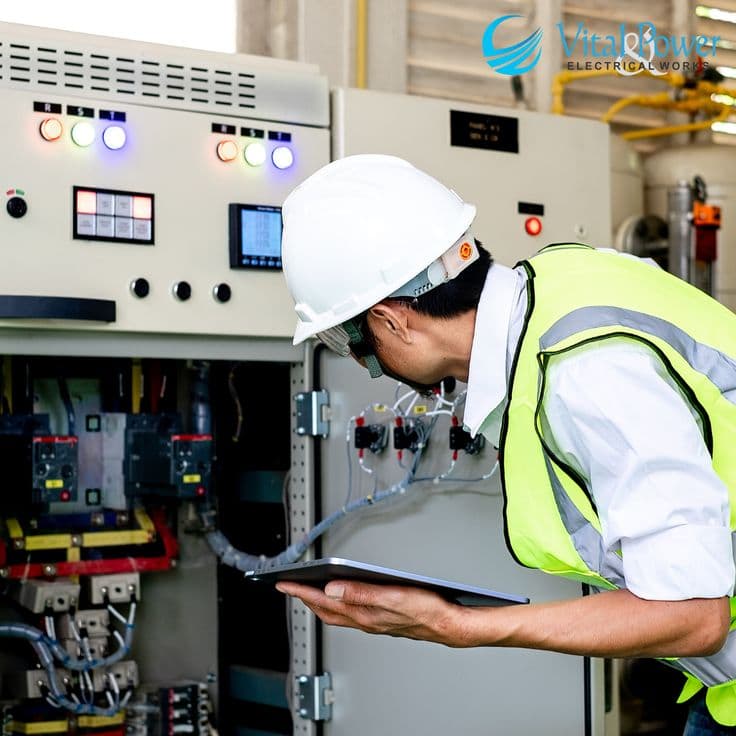
Yes. When an electrical failure threatens to shut down your operation, Hood Builder responds quickly. Our licensed electricians troubleshoot and repair faulty wiring, breaker failures, outlet malfunctions, and equipment power issues across all commercial property types.
Yes. All Hood Builder electricians are licensed in Colorado and trained to meet NEC and local AHJ requirements. We pull permits, coordinate inspections, and document every project to keep your facility code-compliant from start to finish.
Yes. Hood Builder manages electrical for full restaurant build-outs — preconstruction planning, permit drawings, panel and circuit installation, equipment hook-ups, lighting design, and final inspection coordination. We work alongside our mechanical, hood, and fire suppression teams under one contract.
Most commercial air balancing assessments are completed in a single day. Larger facilities with multiple zones, extensive ductwork, or complex HVAC configurations may require 2–3 days. Hood Builder provides a timeline estimate before the assessment begins based on your building size and system complexity.
Yes, in most cases. Unbalanced systems run longer cycles, fight against themselves, and condition outside air unnecessarily. Restoring proper balance reduces all of these inefficiencies — our clients typically report 10–20% reductions in HVAC energy costs after balancing.
Yes — new systems are not automatically balanced. Installation errors, improper damper settings, and duct layout issues are common even in new construction. A post-installation air balancing assessment ensures your system performs to design specifications from day one and helps avoid warranty disputes with equipment manufacturers.
HVAC maintenance focuses on keeping individual components — filters, coils, belts, refrigerant — in working condition. Air balancing measures and adjusts how air moves through the entire system as a whole. Maintenance keeps parts running; balancing ensures conditioned air reaches every zone at the right volume and pressure.
Many commercial building codes and mechanical standards — including ASHRAE guidelines and local mechanical codes — require air balancing for new construction and major HVAC renovations. Even where not explicitly mandated, balancing is often required to pass final inspection and obtain a certificate of occupancy.
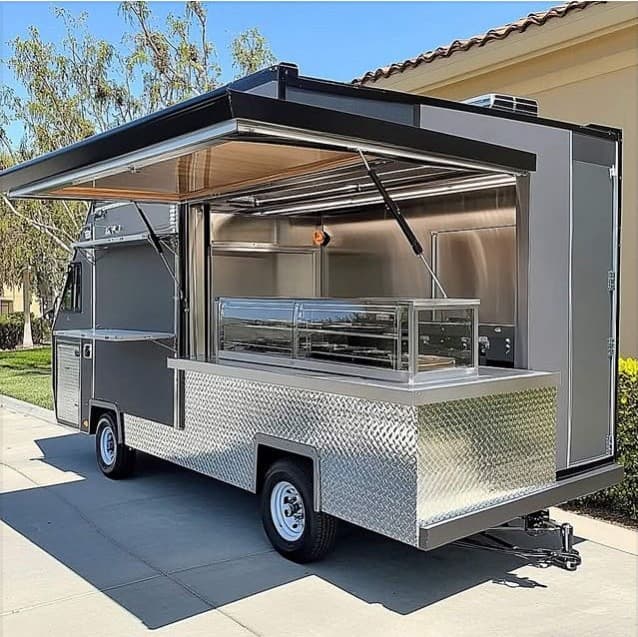
Yes — any food truck with cooking equipment that produces grease-laden vapors requires a fire suppression system, just like a brick-and-mortar commercial kitchen. NFPA 96 and local fire codes apply to mobile kitchens. Hood Builder installs systems specifically designed for food trucks and coordinates with local health and fire departments for inspection and certification.
Design and layout planning typically takes 1–2 weeks depending on complexity. Full build-out timelines vary by vehicle, equipment, and permitting requirements. We'll provide a project schedule at the start of every engagement.
Yes. Hood Builder services, repairs, and recertifies fire suppression systems regardless of who installed them. Our technicians work with all major suppression brands and can bring an existing system up to code during scheduled maintenance or after an inspection failure.
Cleaning frequency depends on your cooking volume — most food truck operators need professional hood and kitchen cleaning monthly, quarterly, or semi-annually. NFPA 96 sets minimum intervals based on the type and volume of cooking. Hood Builder assesses your operation and recommends a compliant schedule.
Yes. Hood Builder coordinates directly with local health and fire departments throughout design, installation, and certification. We provide the documentation inspectors need — including fire suppression system layouts, hood and ventilation specs, and cleaning records — to help your mobile kitchen pass inspection.
Get Your Free Project Estimate
Tell us about your facility needs, and our contracting experts will reach out within 48 hours to discuss the details.